The citation looked perfect. It was on point, it was Supreme Court, and it said exactly what you needed. Then opposing counsel notes — politely, in open court — that the doctrine was abandoned some years ago.
Every practitioner knows the risk. Few have a fast way to rule it out. The honest answer is that "still good law" isn't one question; it's three, and they fail in different ways.
The three ways an authority goes stale
1. A later decision overruled or abandoned it. The Supreme Court departs from its own precedent — sometimes squarely, sometimes by narrowing a case until nothing of it survives. The original decision stays published and searchable, reading exactly as persuasive as the day it came out. Nothing on its face tells you it has been displaced.
2. The statute it applied was amended or repealed. The reasoning can be untouched while the rule it rests on has moved. RA 10951 (2017) adjusted the fines and property-value thresholds throughout the Revised Penal Code; RA 9346 (2006) prohibited the imposition of the death penalty. Decisions computing penalties under the old figures, or applying the old penalty scale, were never overruled — they simply apply a rule that no longer exists in that form, and nothing on the face of the decision warns you.
How far this reaches is easy to underestimate: RA 10951's favourable provisions were applied retroactively even to judgments that had already become final, with the Supreme Court issuing guidelines for re-computing those sentences. A statute can unsettle cases that looked closed.
3. It's been distinguished into a corner. Never overruled, still cited, but every subsequent case has confined it to its facts. It is good law about a situation that isn't yours.
Two examples, and why "overruled" is rarely a clean switch
Legal interest. Nacar v. Gallery Frames (G.R. No. 189871, 13 August 2013) is the decision everyone reaches for: following BSP-MB Circular No. 799, the rate became 6% per annum effective 1 July 2013. That rate is still current. But Nacar also laid down guidelines for computing interest — and those were modified by the Court En Banc in Lara's Gifts & Decors, Inc. v. Midtown Industrial Sales, Inc. (G.R. No. 225433, 20 September 2022). So a lawyer who cites Nacar for the rate is right; one who reproduces its computation guidelines as the current framework is nine years behind. Half a case can go stale.
A doctrine abandoned — but only going forward. Vector Shipping (G.R. No. 159213, 3 July 2013) held that an insurer's subrogation claim prescribed in ten years. In Henson v. UCPB General Insurance (G.R. No. 223134, 14 August 2019), the Court En Banc said it "must heretofore abandon the ruling in Vector." That it took an En Banc ruling is not incidental: under the Constitution, no doctrine laid down by the Court — whether En Banc or in Division — may be modified or reversed except by the Court sitting En Banc. Vector was a Division case; only the full Court could displace it.
Case closed? Not quite — and this is the part worth internalising: Henson applied the new rule prospectively, expressly protecting parties who had relied on Vector in good faith. UCPB's own claim survived precisely because it had been filed under the old doctrine. So Vector is no longer the rule going forward, yet it still governs claims filed in the interim window. "Overruled" is rarely a clean on/off switch — you have to read what the later case actually did, and to whom it applies.
The manual method, and why it's slow
Done properly you would: pull every subsequent decision that cites your case, read how each one treats it, then separately check whether the statutory provision behind it has been amended since. For one authority that's an afternoon. For the eight you plan to cite in a pleading due tomorrow, it isn't happening — so in practice it gets done for the two you're least sure about, and the other six ride on hope.
Making it a few minutes instead
This is the specific job the Citation Map in Case-Law Analytics exists for.
Open any decision and the map puts it at the centre, then draws out what it's connected to: the cases around it, colour-coded by outcome; the statutes and rules it applies, along the top; the doctrines it turns on, along the bottom. The links are labelled, so you see why two rulings connect — one cites the other, or they share a statute, or they share a principle.
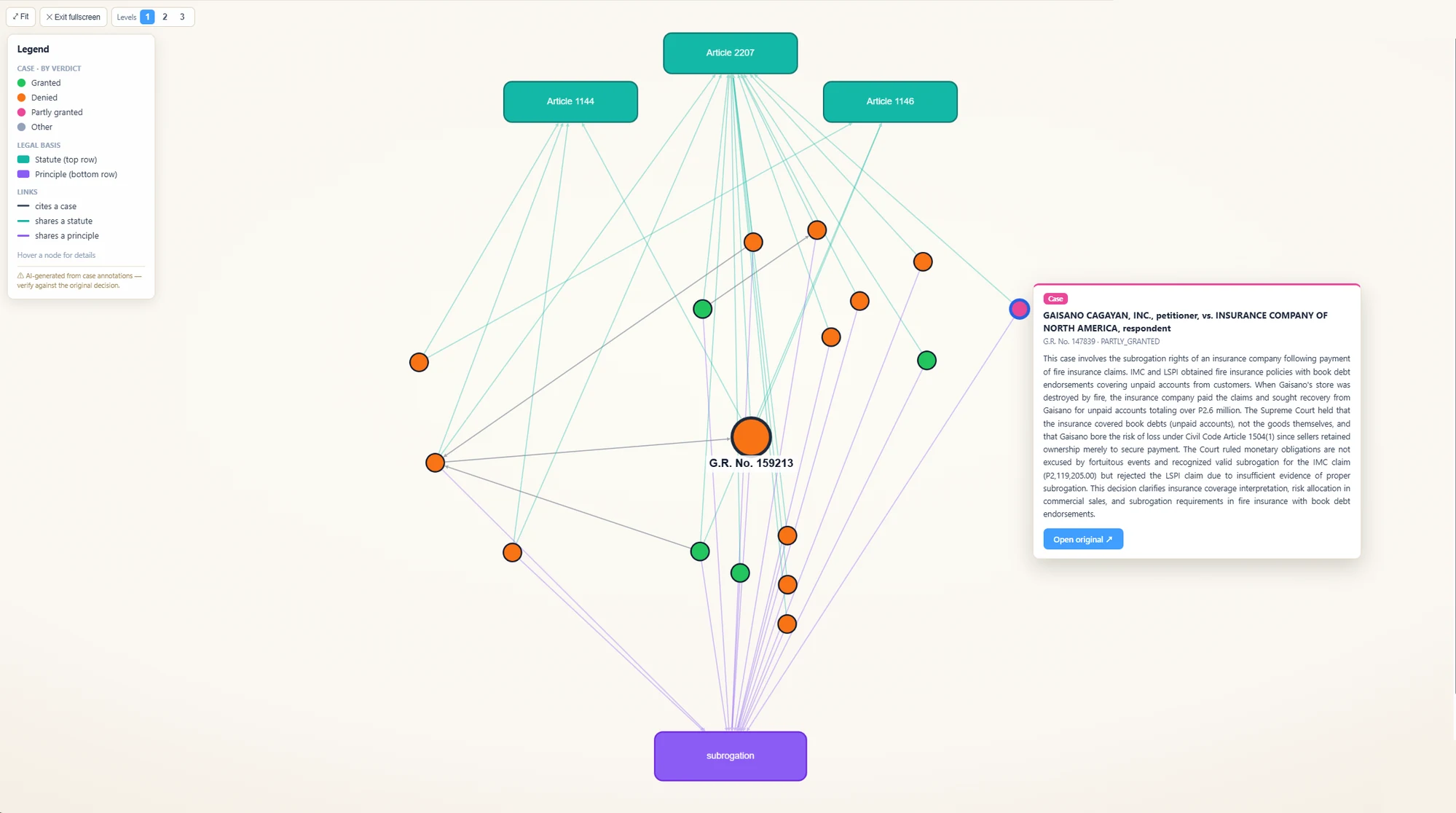
For this task that layout does the tedious part: the later decisions that engage with your case are on screen, and you can see at a glance how they came out. From there you read the ones that matter. Expand a level and the network widens from the case's immediate authorities out to the broader line of jurisprudence.
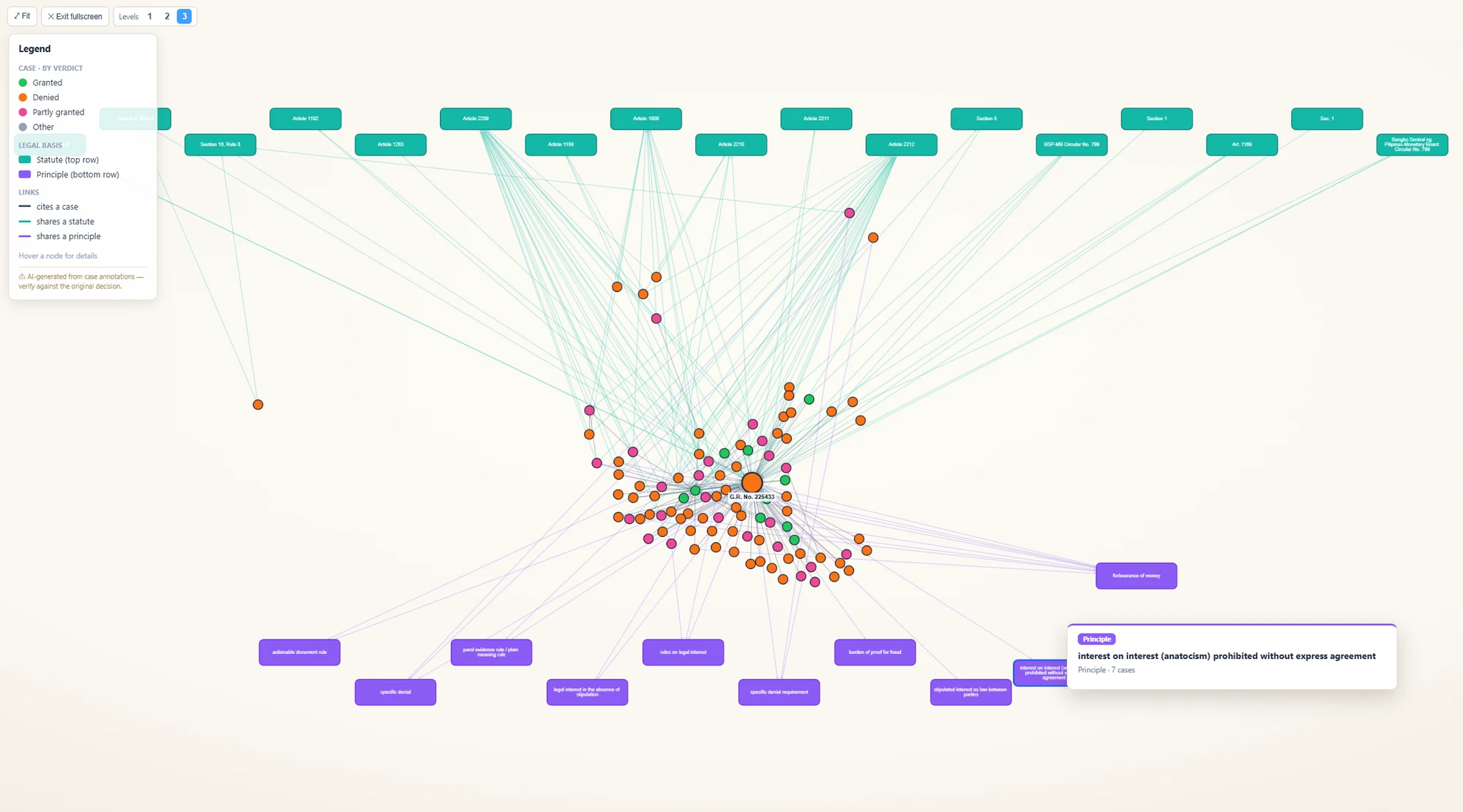
Be clear about what this does and doesn't do. The map does not stamp a case "overruled" and we don't want it to — that judgment is yours to make, on the text. What it removes is the search: finding which later decisions touch your authority, and which statutes it stands on, so you can go read them. Every node opens to its primary source — the actual decision, the verbatim provision. That's the whole design: it points, you verify.
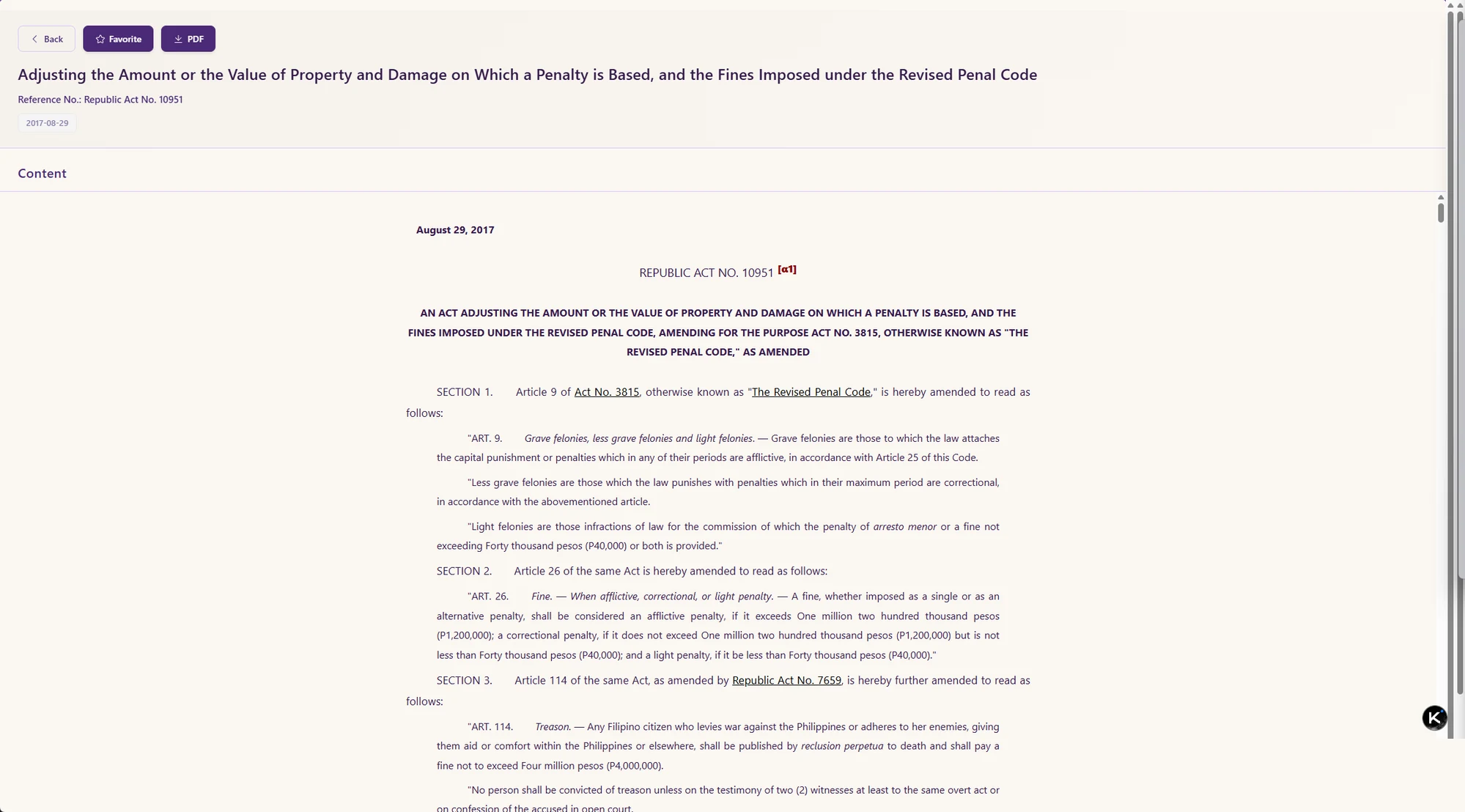
For the statutory half of the question, Law Explorer gets you to the provision itself so you can see what the current text says, rather than what a 1998 decision said it said.
And when you want the shape of a long later decision before committing to it, Visual Digest gives you the summary, the timeline, and a diagram of the court's reasoning — enough to tell whether it actually disturbs your authority or merely mentions it.
The habit worth keeping
Check the authority you're most confident about. Stale citations rarely come from the case you doubted — they come from the one you've cited for years without looking again.
Before you rely on it, check what came after it.
Open Case-Law Analytics →Intellegal is a legal research and review assistant developed by Technese Legaltech Inc. (Makati). It supports legal work and does not provide legal advice; verify all outputs against the primary sources it cites.