Legal research shouldn't start with a scavenger hunt. Too often, finding the statute that actually governs your question means guessing the exact title, half-remembering a law number, or wading past look-alike issuances. We rebuilt Law Explorer to take you straight to the governing law — so you spend your time reasoning, not hunting.
Here's what's new.
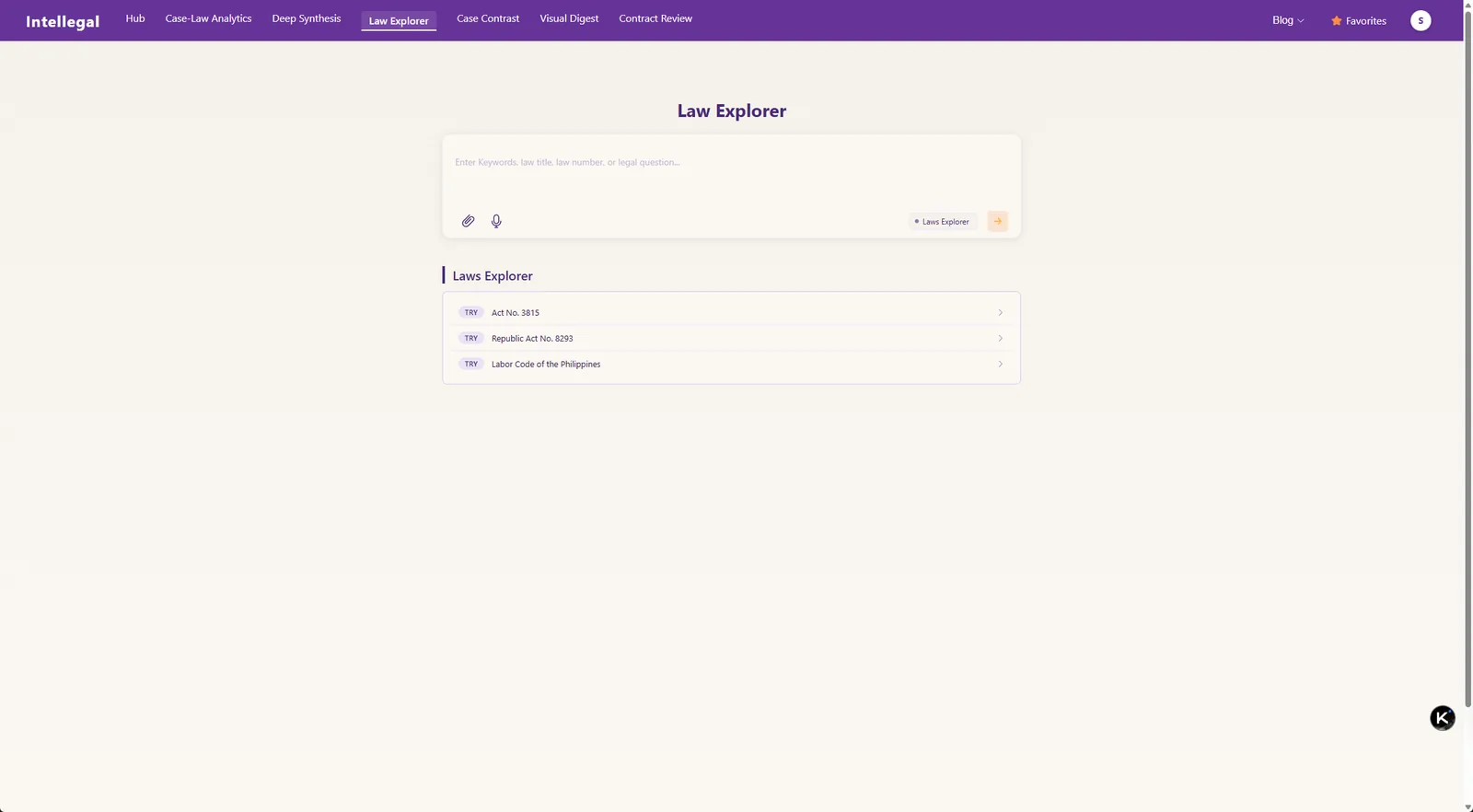
- Go straight to the governing statute — surfaced first, not buried in a list.
- Search by law number, by title, or by a plain-language question.
- Any statute or issuance title is recognized — across the whole corpus.
- Results ordered by legal authority.
- On-point results, without the noise.
Straight to the governing statute
Ask about a rule and Law Explorer surfaces the statute that governs it — placed first, with its full text a click away — instead of a long list you then have to sort out. Open it and read the actual provision in its true, verbatim wording, right at the source. When you need the law that controls, you see the law that controls.
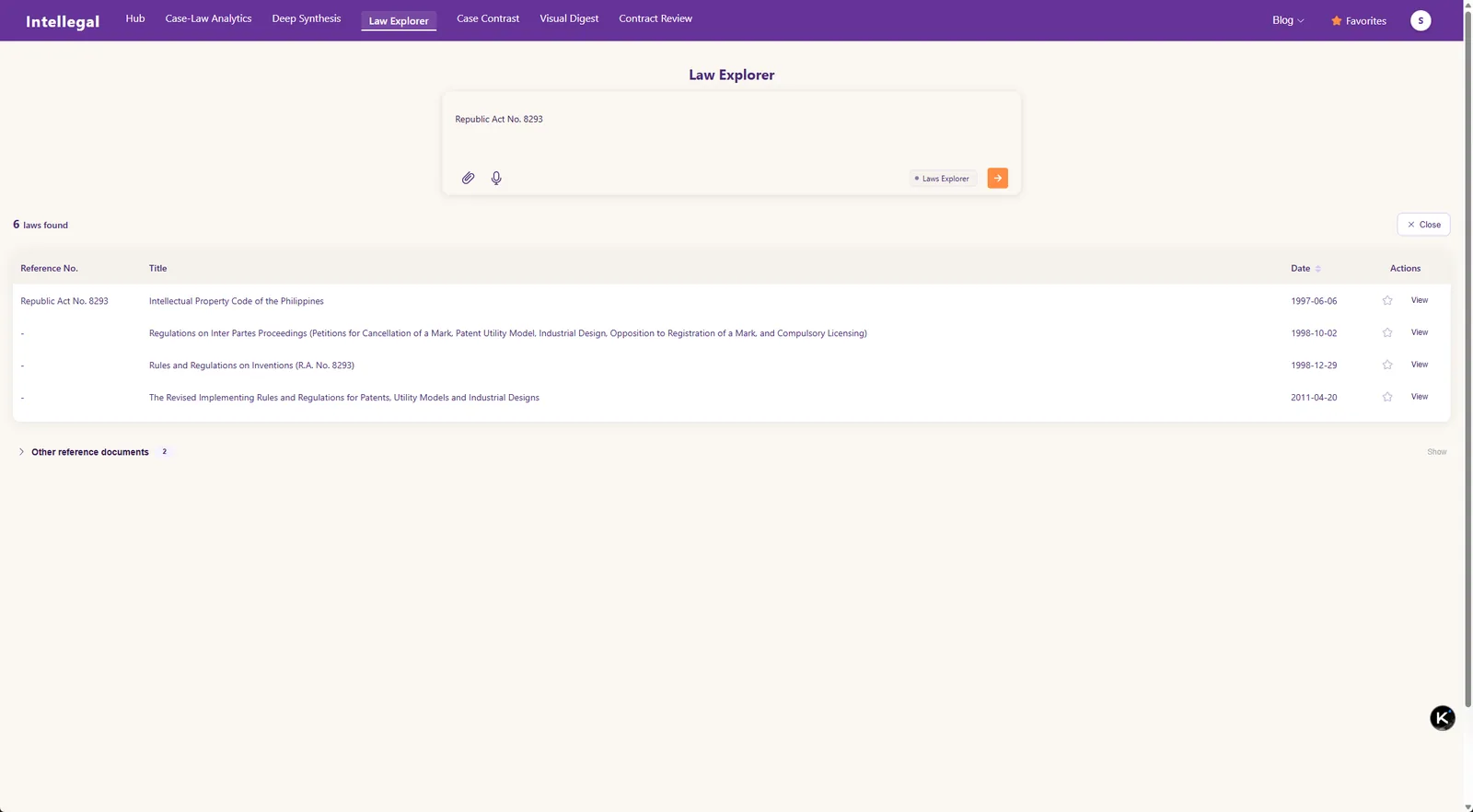
Search the way you think — a number, a name, or a plain question
Type a law number, a statute or issuance title, or simply ask in plain language — Law Explorer recognizes what you mean and searches accordingly. No boolean operators, no database syntax, and no guessing the exact statutory wording: related legal terms and phrasings are understood for you, so a natural question surfaces the right statutes.
Any title, the right document
Search by the name you already know. Law Explorer recognizes statute and issuance titles across the entire corpus — not a short curated list — so coverage doesn't stop at the famous few. And when a law number could point to more than one issuance, it returns the correct one rather than a pile of look-alikes. Browse a full statute like the Civil Code of the Philippines end to end, or dive into a topic through our deep-research hubs.
Results ordered by legal authority
Not every source carries the same weight, and your results shouldn't pretend otherwise. Law Explorer surfaces authorities in their proper order of precedence — what actually governs first — so you can see the controlling law at a glance instead of sorting by textual similarity alone.
Relevant, not noisy
Meaning-based search is only useful if it stays on point. Law Explorer surfaces genuinely on-topic authorities and keeps loosely-related matches out of your way — so the first results are the ones worth reading.
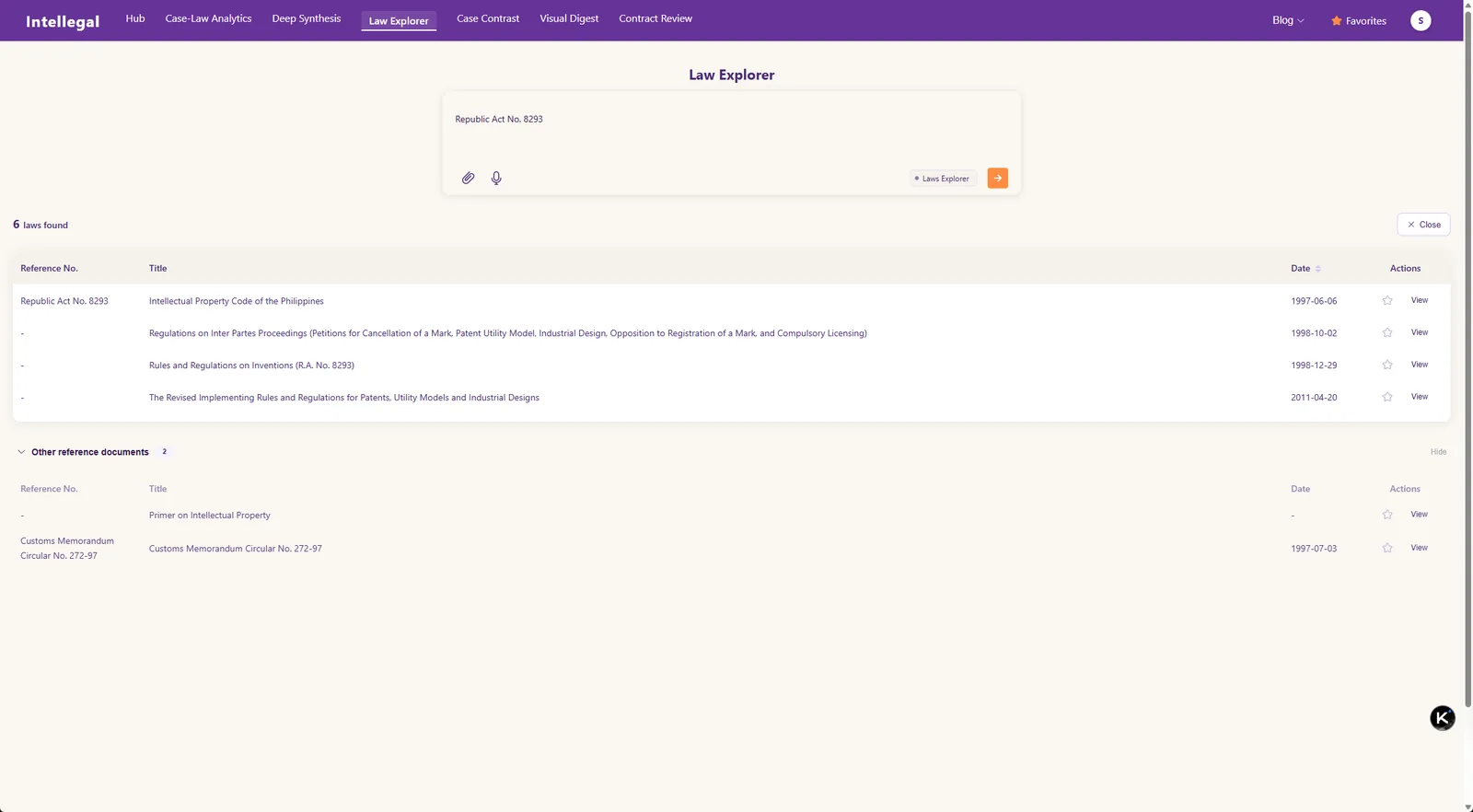
Read it at the source
Every result opens the true primary text — the actual statute or issuance — so you can verify it yourself, the way legal work is meant to be done. Read the full text on screen or export it as a PDF. That's the whole idea behind Intellegal: answers you can check, traceable to the source.
Researching court decisions instead of statutes? That's what Case-Law Analytics is for.